Longevity Innovation
DEEP RELAXATION.
FEEL THE REGENERATION.
MORE ENERGY.
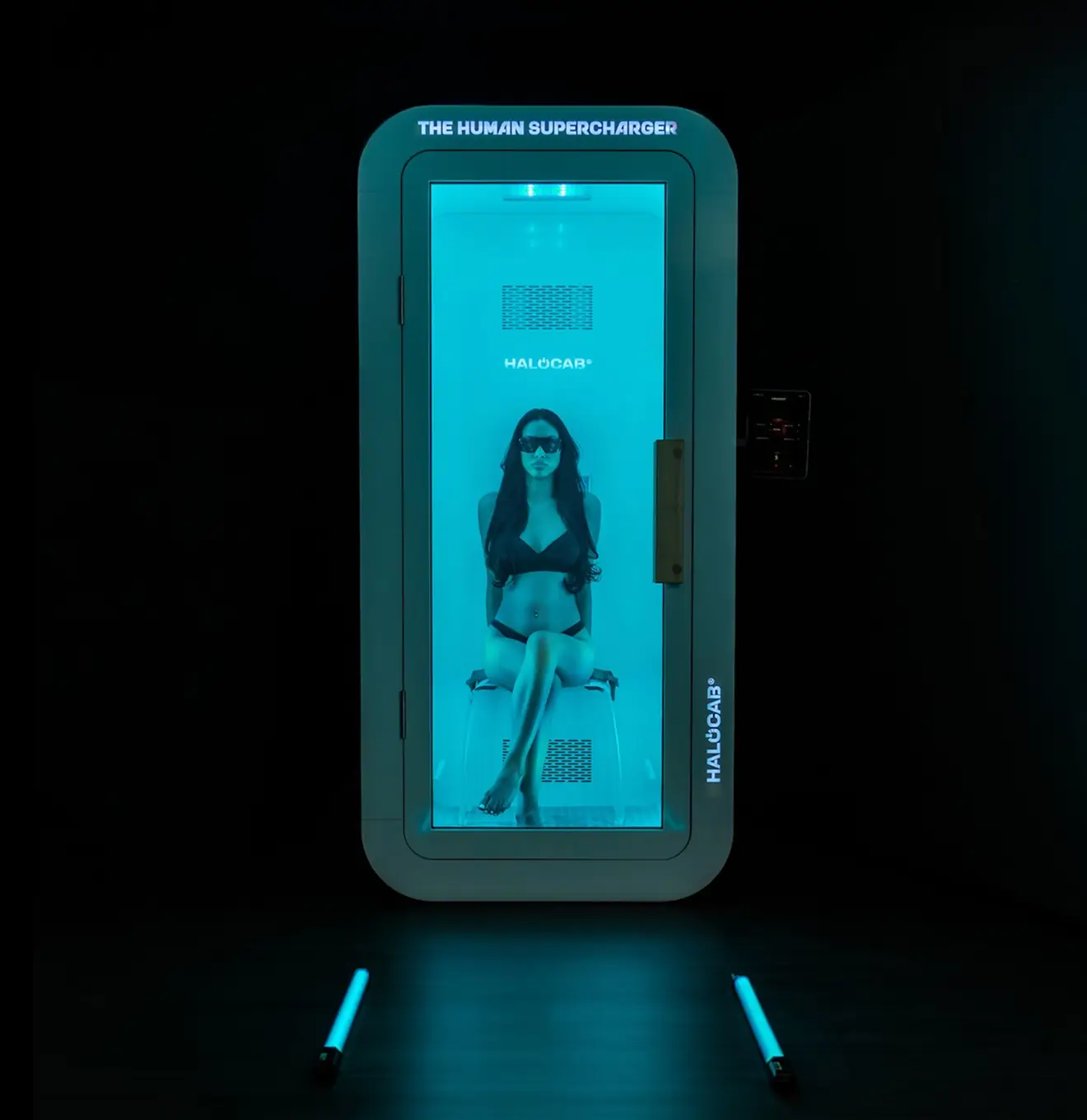
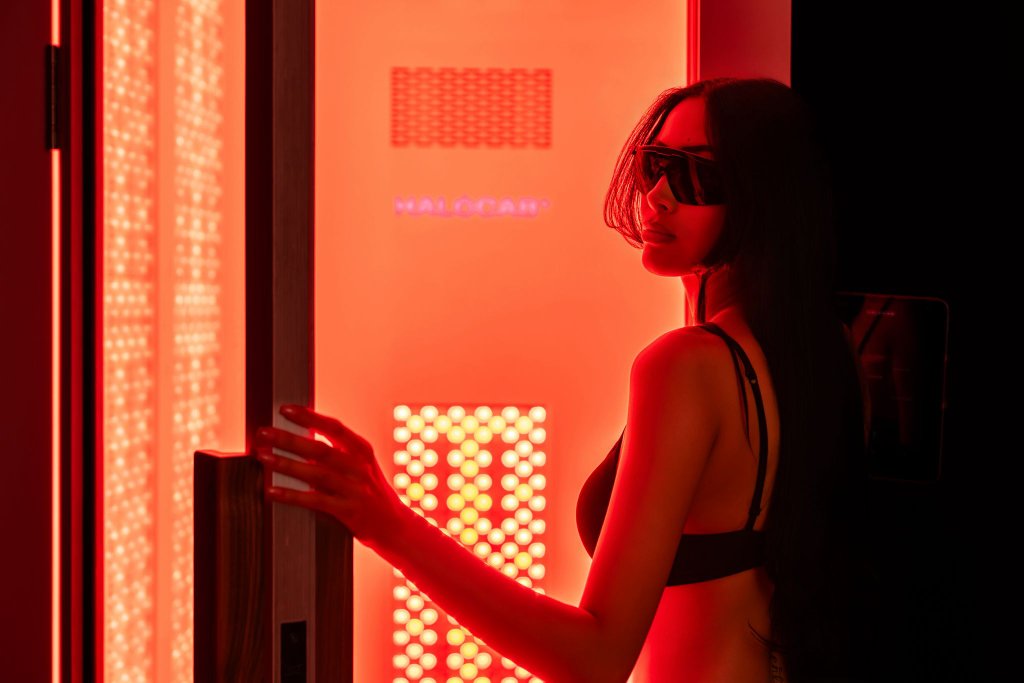
HALOCAB uses an advanced light spectrum with individually controllable wavelengths — from visible light to the near-infrared range. The targeted combination of different nanometer ranges activates cellular processes, supports regeneration, and promotes overall well-being — naturally, gently, and efficiently.
Discuss HALOCAB for Your BusinessLongevity Innovation
LIGHT, ENGINEERED WITH PRECISION
Scientifically grounded wavelengths from blue and green light through red to near-infrared — precisely calibrated to support cellular processes holistically, from surface-level skin vitality to deep tissue regeneration.
480nm — 525nm
Surface Vitality
These wavelengths target the uppermost layers of the skin, help regulate the circadian rhythm, and support a clear, radiant complexion. Blue light has proven antibacterial properties, while green light gently calms and balances the nervous system.
630nm — 660nm
Deep Regeneration
The "golden range" for mitochondrial health. 630nm helps refine the appearance of the skin, while 660nm penetrates deeper to reduce inflammation and accelerate the body's natural healing response by maximising cellular energy production (ATP).
810nm — 850nm
Muscle & Joint Recovery
Near-infrared light (NIR) is invisible, yet highly effective. It penetrates deep into tissue, reaching muscles and joints. It is widely regarded as the gold standard for athletic recovery and the targeted relief of chronic discomfort.
940nm — 1060nm
Cellular Renewal
The deepest-penetrating spectrum. Wavelengths up to 1060nm reach the deepest layers beneath the skin. They support systemic recovery, significantly improve microcirculation, and promote deep cellular detoxification.
Longevity Innovation
Benefits of Light
Light is one of the most extensively studied elements in the fields of wellness and longevity. In HALOCAB, light is delivered in a controlled, even, and systemic way — as part of a holistic regeneration environment that supports relaxation, recovery, and cellular activity.
Cellular Energy
Interaction with Mitochondria
Red light is associated in scientific studies with the activation of cellular energy processes — especially in the context of mitochondrial ATP production.
Regeneration & Recovery
Deeper Light Penetration
Compared to short-wave light, red light can penetrate deeper into skin and tissue without being ionising.
Regeneration & Recovery
Support for Regenerative Processes
Red light is widely used in recovery and regeneration concepts — especially after physical exertion.
Skin & Tissue
Support for Skin Structure
Research associates red light with processes relevant to skin quality, elasticity, and tissue structure.
Neurological Calm & Focus
Reduced Visual Stimulation
Red light is less stimulating for the visual system than bright or blue light — ideal for calm and evening concepts.
Scientific Relevance
A Widely Studied Light Spectrum
Red light is one of the most extensively researched forms of light in the field of photobiomodulation, used in both medical and wellness environments.
Longevity Innovation
MEASURABLE RESULTS OF LIGHT THERAPY
HALOCAB provides study-based results: Red and near-infrared light increase cell energy, promote regeneration and demonstrably contribute to greater performance and vitality.
*No medical claim is being made. Results and perceptions vary from person to person.
Explore the Technology